
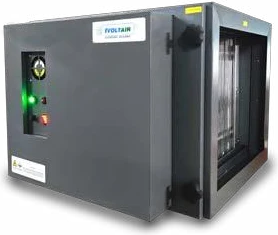
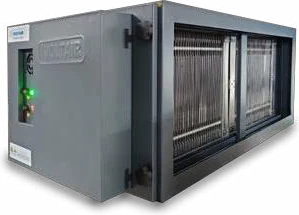
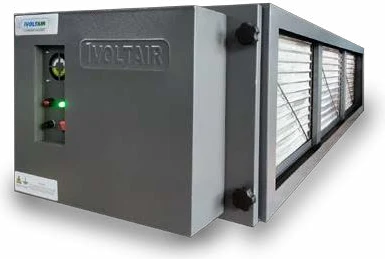
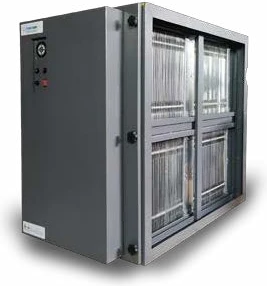
Kitchen exhaust
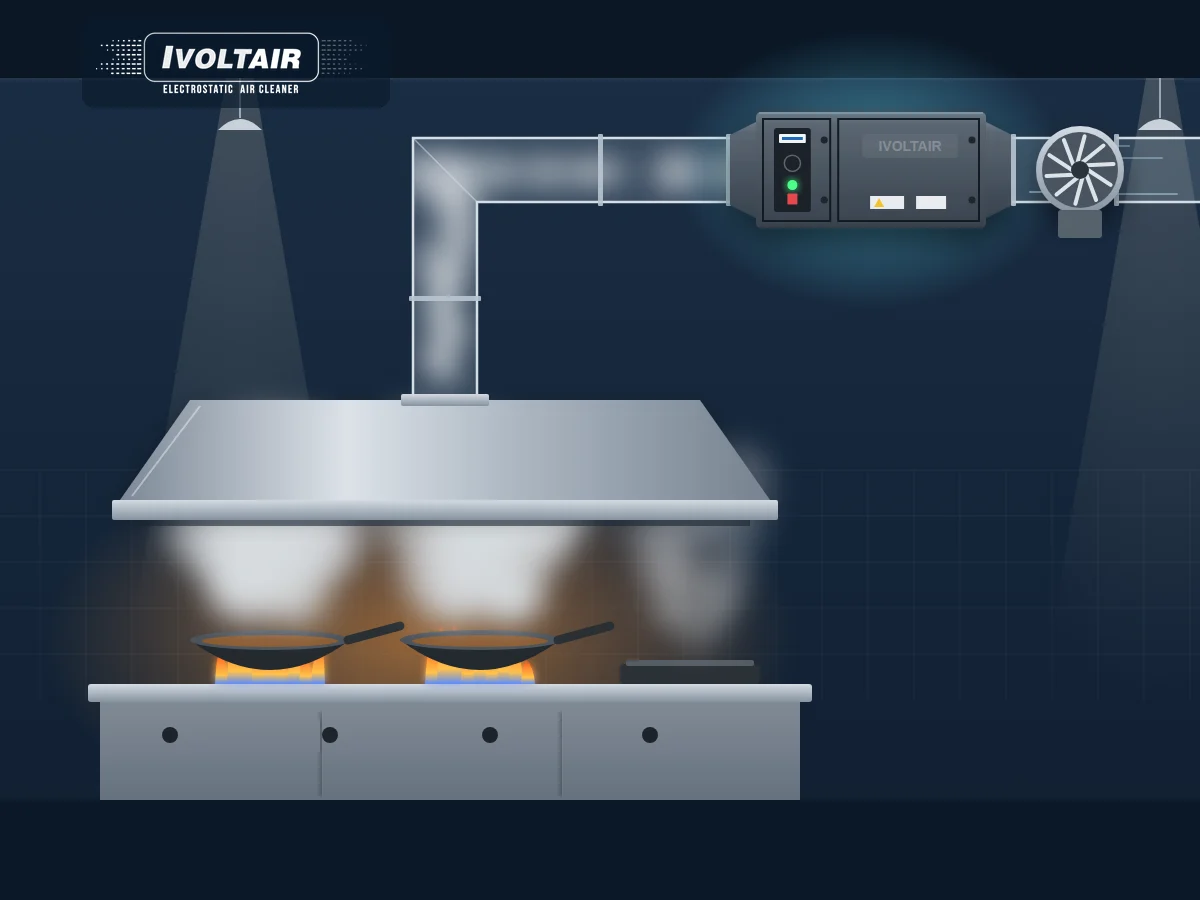
- Smoke and grease
- Wood-fire and tandoor ovens
- Cooking odour
- Display and mobile cooking stations
- Ventless hoods
IVOLTAIR electrostatic air cleaners charge and capture particles from 0.1 to 10 µm, with 95% single-pass efficiency. Built for commercial kitchens, industrial exhaust and HVAC systems.
ASHRAE, NFPA, CE and UL names and logos are trademarks of their respective organizations and companies. They are shown only to identify the standards referenced in the design and testing of IVOLTAIR products, and do not imply endorsement by or affiliation with these organizations.
Enter your exhaust or supply air volume in m³/h or CFM. Above the largest single model, identical units are installed in parallel, and the selector works out how many you need.
Tip: hood exhaust volume, AHU supply or return air volume, or fan duty from your drawings.
An IVOLTAIR ESP dry scrubber drawing smoke from a cooking pot. With the ESP switched off, smoke comes straight out of the discharge. Switched on, the same smoke is captured in the cell.
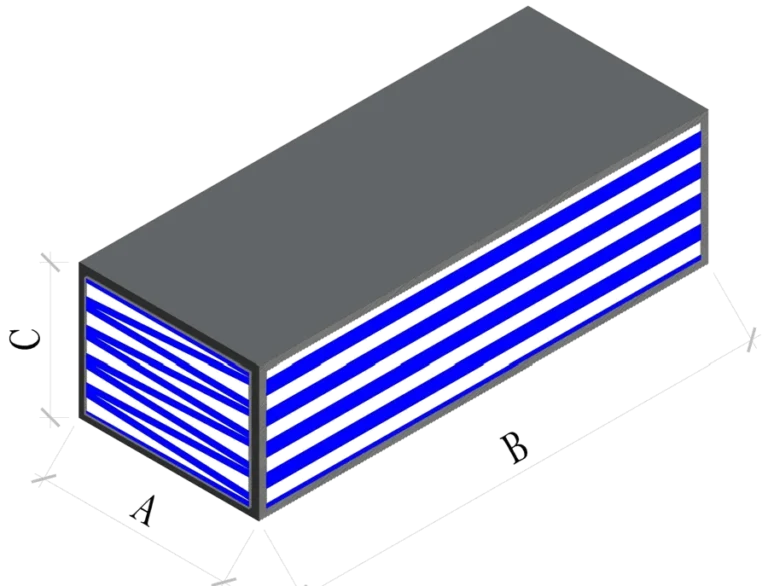
Unit heights shown in proportion: 515 mm for IV2500 to IV7600, 1030 mm for IV10200 and IV15200.
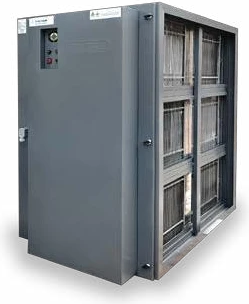
Dual-stage electrostatic precipitation: particles are given a charge, then pulled out of the airstream onto oppositely charged plates.
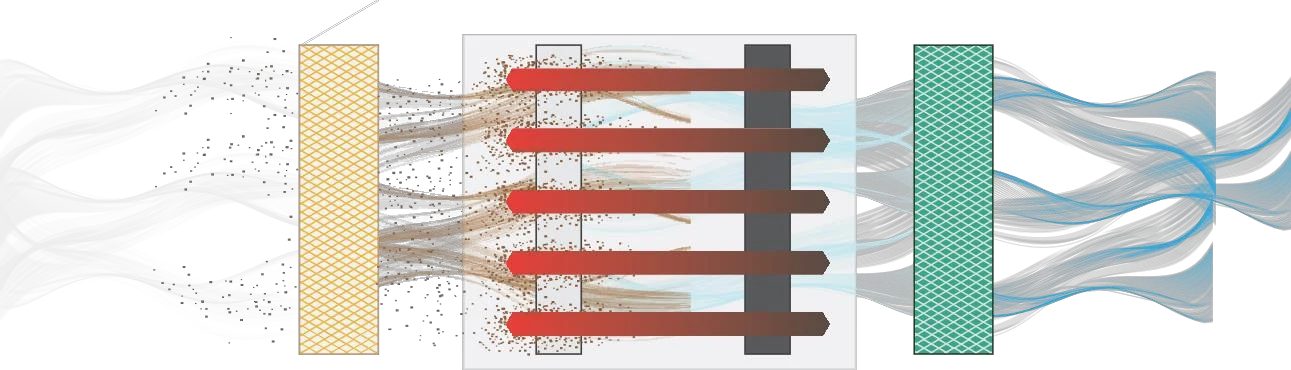
Washable aluminium mesh in an SS304 frame stops large debris and grease droplets.
The zigzag semi-spiked ZSS® electrode charges every particle without generating ozone.
Precision-spaced plates attract the charged particles: oil mist, smoke and dust down to 0.1 µm.
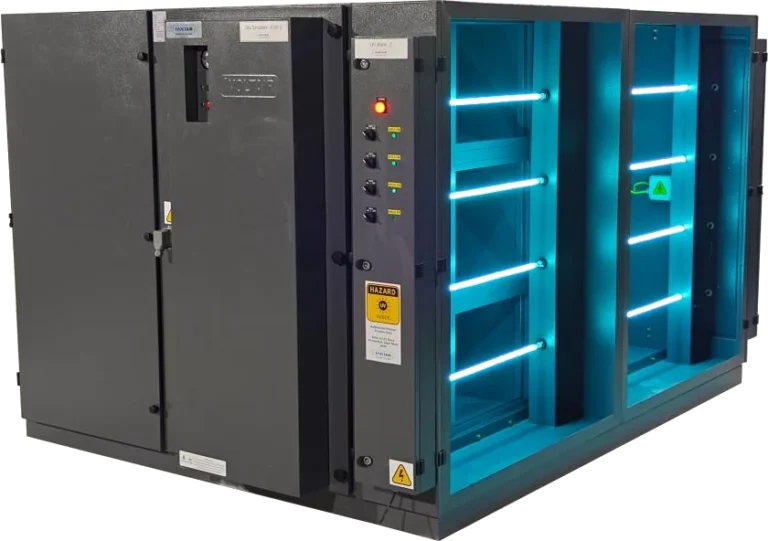
Optional UV and activated carbon stages break down odours and gases.
Air can enter from either end, so the unit fits the site instead of the site being reworked around the unit.
A clean cell adds very little resistance, which keeps fan power and running costs down.
A red LED tells you when the cell needs washing. Auto-clean versions need a hard wash only every 4–6 months.


Anything else? Call or WhatsApp us and we will answer the same day.
An electrostatic air cleaner, or electrostatic precipitator, gives airborne particles an electric charge in an ionizer and then collects them on oppositely charged plates. IVOLTAIR units capture smoke, grease, oil mist and dust from 0.1 to 10 µm with 95% single-pass efficiency, with much lower resistance than a dense mechanical filter.
Start from the air volume of your hood, extraction system or AHU. Single units cover 2,500 to 20,400 m³/h: IV2500, IV5000, IV7600, IV10200 and IV15200. Enter your figure in m³/h or CFM in the model selector on the home page, or send it to us for a free recommendation.
Identical units are installed in parallel, each taking an equal share of the airflow. For example, 30,000 m³/h is usually handled by two IV15200 units. Very large central systems can also use a Ventilation Ecology Unit.
The ESP ionizer uses our ZSS® zigzag semi-spiked electrode, designed to charge particles without generating ozone. Ozone is produced only where it is wanted: the optional UV Bank with Ozone Generation System uses it inside the duct to oxidise cooking and process odours before discharge.
A red LED on the unit shows when the cell needs washing, or you can wash it on a planned schedule. The cell and mesh pre-filters slide out and wash with water and detergent. Auto-clean units need a hard wash only once every 4 to 6 months.
Yes. We offer a free inspection and help select the right air velocity, because rated efficiency depends on air velocity within the specified range and on proper duct design.
Free site inspection and duct-velocity advice with every enquiry.
